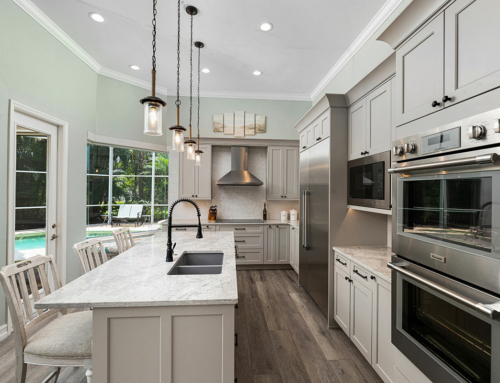

Kitchen design in Southwest Florida is undergoing a thoughtful transformation. Homeowners are not solely focused on finishes or appliances, but rather, on how the kitchen functions as an architectural space within the home. From open layouts that support entertaining, to materials that respond to the coastal environment, today’s kitchens are being designed with intention, longevity and lifestyle in mind. This post explores how architectural kitchen design trends are evolving across Southwest Florida and how well-designed kitchens are shaping the way people live in their homes.
Why Kitchen Architectural is Evolving
The kitchen is the architectural heart of the home. It is no longer just a place for cooking, but a space where people gather, entertain, work and connect. As open-concept living continues to dominate residential design, the kitchen often sets the tone for the entire interior.
In Southwest Florida, lifestyle plays a major role in how kitchens are designed. Homes are built around entertaining, relaxed daily living and strong connections to outdoor spaces. Kitchens must support frequent gatherings, visual openness and seamless transitions to lanais and outdoor kitchens. At the same time, they must perform well in a coastal climate where light, airflow and durable materials matter.
Progressive Design Build approaches kitchen remodeling from an architectural standpoint, considering performance, along with elements like layout, structure, ceiling height, natural light, circulation and finishes. This holistic approach ensures your kitchen works not only as a room, but as an integrated part of your home’s overall design.
“In our projects, the kitchen sets the tone for the entire home. When the architecture of the kitchen works, everything else falls into place,” says David Wherry, President and Owner of Progressive Design Build.
Trend 1: The Rise of Architecturally Designed Kitchens
What’s changing:
Kitchens are increasingly being designed as integrated architectural volumes rather than standalone rooms filled with cabinets. This means the space’s shape, ceiling heights, boundaries and visual weight are all carefully coordinated with the rest of the home’s architecture.
Rather than placing cabinetry into an existing footprint, designers consider how the kitchen aligns with structural elements like beams, windows, ceiling heights, window placement and adjacent living areas. Sightlines are intentional and the kitchen is designed to feel balanced from every angle.
Architectural elements we’re using:
Architecturally designed kitchens often include features that define zones without closing off the space. These elements help organize the kitchen while maintaining openness and flow.
Common architectural strategies include:
- Structural beams or ceiling treatment that visually anchor the kitchen
- Columns or partial walls that frame the space without enclosing it
- Precise alignment with living and dining areas to maintain symmetry and cohesion
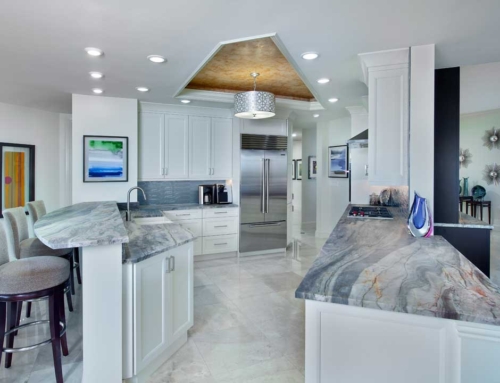
View our Contemporary Home Kitchen Remodel in Bonita Springs.

“We’re designing kitchens that feel intentional from every angle—where the architecture guides how the space is used, not just the cabinetry,” says Cristy Williams, Designer at Progressive Design Build.
Trend 2: Statement Kitchen Islands as Structural Anchors
Why the kitchen island is evolving:
Kitchen islands have evolved from simple prep stations into architectural centerpieces. In many Southwest Florida homes, the island is the visual and functional anchor of the entire kitchen. Today’s islands are larger, heavier in appearance, and designed with furniture-like presence. They help define the kitchen within an open floor plan while providing seating, storage and visual balance.
Products and materials we’re excited about:
Statement islands often feature bold materials and textures that contrast with surrounding cabinetry. Popular selections include:
- Waterfall stone islands with dramatic veining
- Fluted stone, plaster or wood bases that add depth and texture
- Integrated seating with concealed storage for a clean appearance
Design considerations:
Designing an island as a structural anchor requires careful planning. Proportion and scale must relate to ceiling height and room volume, while sightlines from adjacent spaces should remain open and inviting. Lighting is also critical, as pendants or linear fixtures help reinforce the island’s architectural presence.
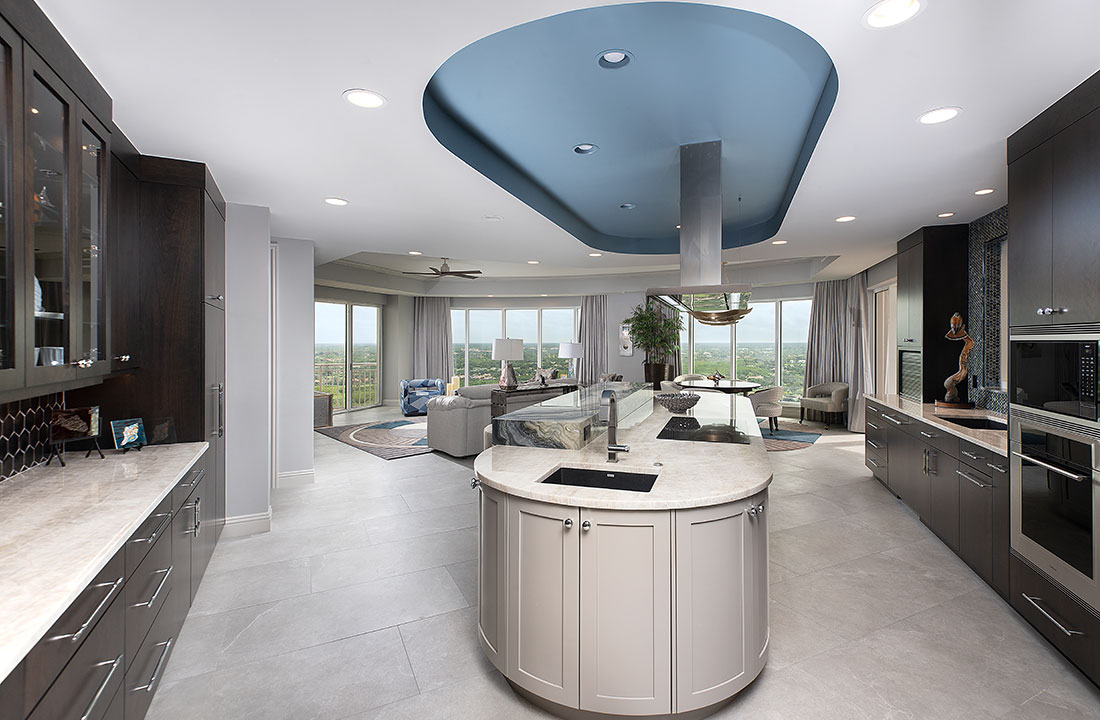
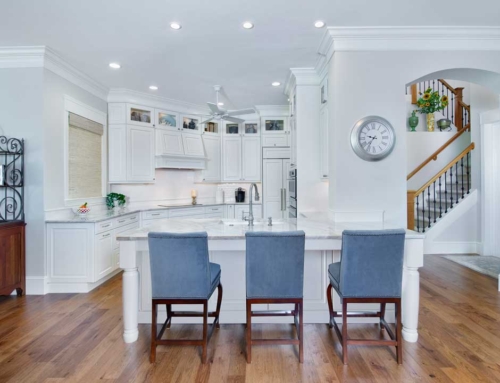
View our Bonita Bay High Rise Condominium Contemporary Kitchen Remodel.
Trend 3: Seamless Indoor-Outdoor Kitchen Connections
A Southwest Florida essential:
In Southwest Florida, indoor-outdoor living is a way of life. Kitchens are increasingly designed to visually and physically connect to lanais, pool decks and outdoor kitchens, allowing homeowners to entertain effortlessly.
Rather than treating outdoor spaces as separate zones, architects are designing kitchens that extend outward, creating a continuous living experience.
Architectural strategies:
Seamless connections rely on architectural planning as much as material selection. Effective strategies include:
- Multi-slide or pocketing glass doors directly off the kitchen
- Continuous floor materials that visually connect interior and exterior spaces
- Extended kitchen sightlines that draw the eye toward outdoor entertaining areas
Products we love:
High-performance products make connections between the indoors and outdoors both beautiful and durable. Products we love include:
- Hurricane-rated, flush-track sliding glass systems
- Porcelain surfaces that transition from interior to exterior
- Retractable screens and pass-through window systems
“Our clients want kitchens that open effortlessly to the outdoors. When designed correctly, the kitchen becomes the bridge between interior living and Florida’s outdoor lifestyle,” David says.
Trend 4: Clean Lines, Integrated Appliances & Hidden Function
Architectural minimalism with purpose:
Minimalist kitchens are gaining popularity, but not at the expense of function. The goal is to create calm, uncluttered spaces where the architecture takes center stage while storage and appliances remain highly accessible.
This trend is particularly effective in open-concept homes, where visual simplicity helps the kitchen blend seamlessly with surrounding spaces.
Design features:
Key features that support this approach include:
- Panel-ready appliances and integrated refrigeration
- Appliance garages and concealed storage walls
- Flush cabinetry with minimal or recessed hardware
Why it works:
By reducing visual noise, architectural elements like stone, natural light and ceiling volume become the focal points and take center stage. The open concept kitchen feels more like a living space and less like a utilitarian room.
“When function disappears visually, the architecture shines,” Cristy says. “That’s where great kitchen design really lives.”
Trend 5: Natural Materials & Coastal-Inspired Texture
Material direction:
Southwest Florida kitchens are moving away from stark white palettes and toward warmth, texture and natural materials. The focus is on finishes that reflect the coastal environment without feeling overly themed or trendy.
Rather than using literal coastal motifs, designers are drawing inspiration from nature through subtle color and texture.
Products and finishes we’re excited about:
Natural materials add depth and character while aging gracefully in a coastal climate. Popular selections include
- Honed quartzite and natural stone countertops
- Wood cabinetry with subtle grain patterns and matte finishes
- Plaster or textured backsplash surfaces
- Soft, earthy color palettes inspired by sand, shells and sea grass
Architectural impact:
These materials enhance the architectural quality of the kitchen without overpowering it. When chosen thoughtfully, they create timeless spaces that feel grounded, inviting and appropriate for Southwest Florida living.
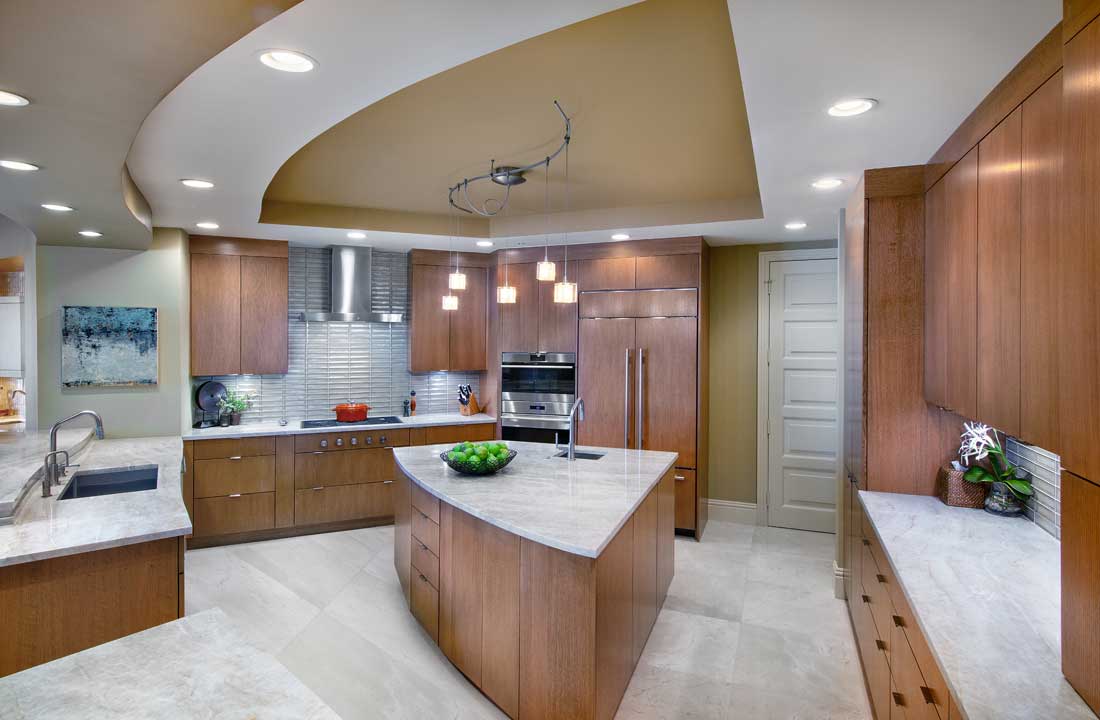
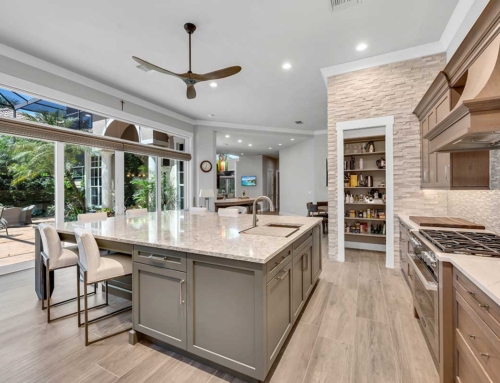
View our Bonita Bay luxury Contemporary Kitchen Remodel in Southwest Florida.
Lighting as an Architectural Design Tool in the Kitchen
Beyond decorative fixtures:
Lighting plays a role in shaping how a kitchen feels and functions. Rather than relying solely on decorative fixtures, architects are using lighting to emphasize planes, volumes and transitions within the kitchen space and its actual architecture.
Design approaches:
Effective architectural lighting strategies include:
- Recessed lighting that highlights ceiling planes
- Under-cabinet and toe-kick lighting to create floating effects
- Sculptural pendants that reinforce island scale and proportion
Why it matters:
Thoughtful lighting enhances volume and depth, improves usability and allows the kitchen to transition seamlessly from day to evening. It also highlights architectural features that might otherwise go unnoticed, adding to the overall experience of the space.
Designing Kitchens for Longevity, Not Trends
While trends provide inspiration, lasting kitchen design relies on timeless architectural principles. By balancing innovation with restraint, Progressive Design Build emphasizes decisions that will continue to feel relevant years into the future.
Rather than chasing every new look, the focus is on proportion, material quality and how the kitchen supports daily life. This approach ensures that your kitchen remains functional, beautiful and appropriate as your lifestyle evolves.
“We don’t chase trends, we interpret them through the lens of architecture, lifestyle and longevity,” David says. “That’s how we design kitchens that still feel right ten or twenty years from now.”
The Progressive Design Build Approach to Kitchen Architectural Design
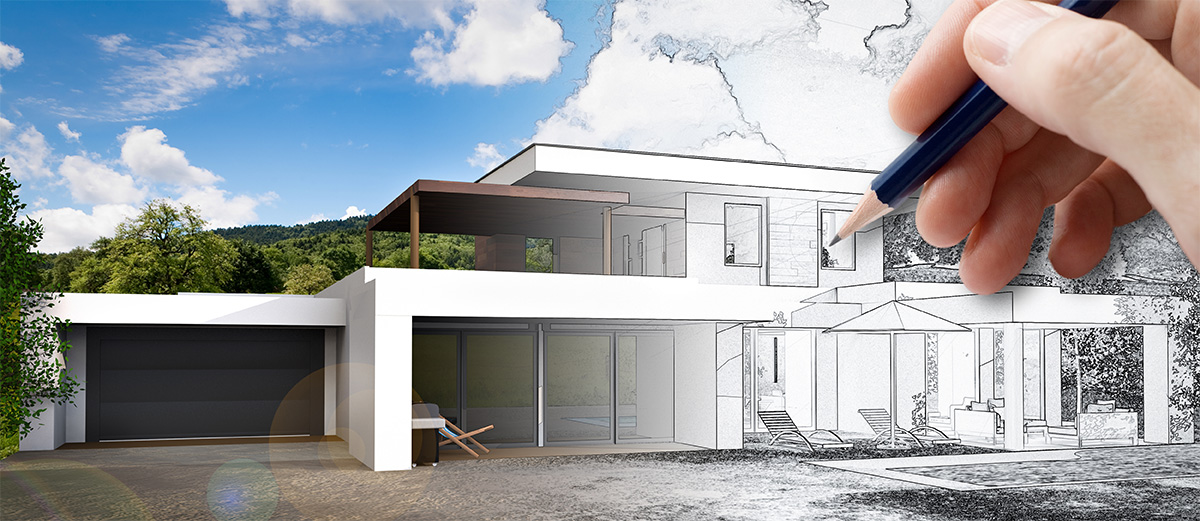
At Progressive Design Build, kitchens are treated as custom architectural experiences rather than isolated renovations. Every project begins with understanding how your kitchen fits with your home’s structure and flow, and with your lifestyle. This integrated perspective allows design decisions to support both aesthetics and performance.
Our design-build process ensures seamless collaboration from concept through construction. Designers, architects and builders work together from the start to minimize surprises and ensure that the final kitchen reflects your original vision with precision and care.
If you’re a Southwest Florida homeowner who’s considering a kitchen design, Progressive Design Build offers the experience, creativity and architectural insight needed to deliver a design-build kitchen that’s both beautiful and enduring.
Contact Us
Explore our recent kitchen projects, or schedule a design consultation. Take that first step toward creating a space that truly feels like the heart of your home.
Want more inspiration? Sign up for our newsletter.